

LAND CLEARING
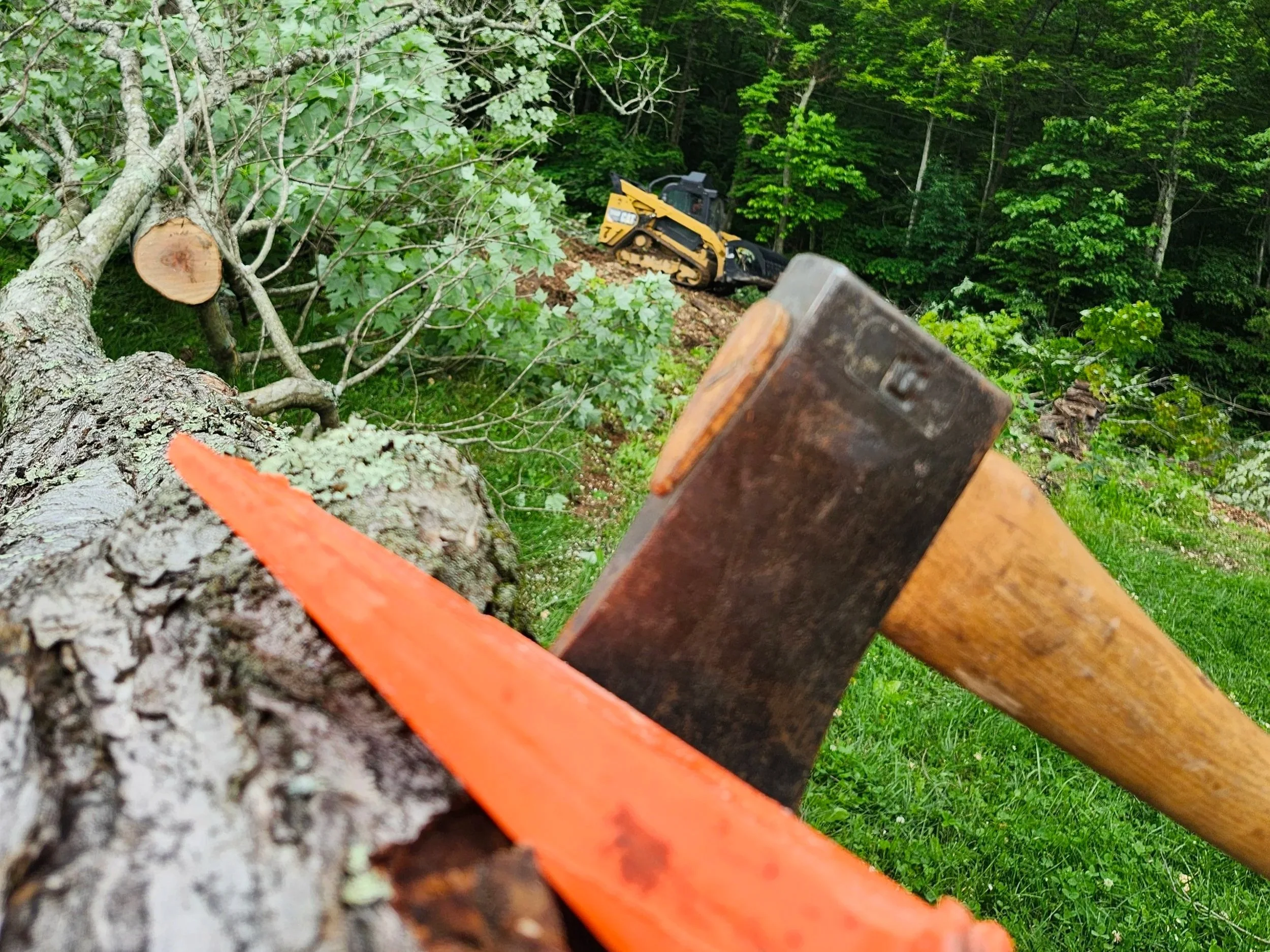
Reclaim Overgrown Land into Usable Space
Land clearing transforms overgrown property into usable, productive landscapes. Eden Hills Land Management uses state-of-the-art equipment and proven techniques—from selective thinning and forestry mulching to full clearing and grubbing—to remove trees, brush, and understory while protecting soils, drainage, and long-term site function. When mulching is appropriate, we recycle vegetation into nutrient-rich groundcover; when full removal is required, we perform careful stump and root work and finish grading for stability. By matching method to site and objective, we minimize disturbance, reduce wildfire and erosion risk, and promote healthy vegetation recovery. Whether preparing for a pond, food plot, pasture, homesite, or improved access, our clearing work improves usability, aesthetics, and the ecological health of your land.
Our land clearing services pair heavy-equipment capability with ecological and wildlife know-how to prepare land for productive, long-lasting use. We remove trees, brush, and understory while protecting soils, drainage, and long-term site function. Below is a full overview of the clearing methods we offer, when to choose each approach, and the practices we use to deliver durable, conservation-minded results.
Clearing Methods — What We Offer & Why They Matter
Selective Thinning & Low-Impact Thinning
What it is: Targeted removal of select trees, saplings, and understory to open the canopy, increase light to the forest floor, and reduce competition.
Best for: Improving timber health, creating travel corridors, improving wildlife habitat, opening space for food plots without wholesale loss of canopy.
Benefits: Improves forest structure and age diversity, encourages desired understory and browse growth, low soil disturbance, retains large trees and mast producers.
Equipment & impact: Performed using track loaders, excavators, and hand crews as needed. Minimal site disturbance when done properly; often the preferred first step for habitat work.
Forestry Mulching
What it is: On-site grinding of trees and brush into mulch using mulching heads or dedicated mulching machines.
Best for: Rapid vegetation reduction where leaving organic mulch is an advantage—brush, small trees, and dense understory. Works well for trail corridors, wildfire fuel reduction, and quick re-establishment of ground cover.
Benefits: Produces nutrient-rich ground cover that reduces erosion, improves soil moisture retention, and speeds natural regrowth. Minimal hauling of material offsite and reduced site scarring compared with full grubbing.
Limitations: Mulch layer can slow some construction activities; not ideal where full root removal is required (e.g., some homesites or heavy construction pads).
Full Clearing & Grubbing (Stump & Root Removal)
What it is: Complete removal of trees, stumps, and roots to prepare a site for construction, pasture, or intensive agricultural use.
Best for: Homesite preparation, pasture renovation, commercial site prep, and areas where roots/stumps would interfere with equipment or finished grading.
Benefits: Eliminates regrowth sources and creates a stable base for construction or turf. Allows precise finish grading and compaction.
Equipment & impact: Typically performed with dozers, excavators, and root rakes. This is the highest-impact method and requires careful erosion control and soil management to protect long-term site health.
Stump Grinding & Root Raking
What it is: Mechanical grinding of stumps or pulling and raking roots from the soil.
Best for: Sites where trees are felled manually or mechanically but stumps must be removed for aesthetics, machinery access, or site finish.
Benefits: Lower disturbance than full grubbing when only stumps need to be addressed. Quick turnaround and good for transition phases between clearing and finish work.
Dozer-Based Clearing & Pushing
What it is: Using a dozer to remove vegetation and push debris into spoil piles or windrows; useful for large acreage clearing and spoil management.
Best for: Large, open tracts, initial phases of pond spoil handling, and creating access corridors.
Benefits: Fast and economical on large jobs; excellent for moving heavy woody debris and creating staging areas. Must be paired with erosion control and finish grading to reduce compaction and runoff.
Excavation & Mass Grading (Pond & Site Preparation)
What it is: Excavation, embankment construction, spoil management, compaction, and finish grading for ponds and construction sites.
Best for: Pond construction, building pads, road/driveway base, and any project requiring engineered earthwork.
Benefits: Creates stable water features and construction surfaces. Proper compaction, outlet design, and spillway construction ensure long-term performance. We integrate hydrologic and ecological design to support aquatic habitat and avoid downstream impacts.
Hand Felling & Manual Work
What it is: Saw and wedge felling, hand crews for tight or environmentally sensitive areas.
Best for: Work near structures, fence lines, utility corridors, or sensitive resources where machines cannot safely operate.
Benefits: Allows precise removal with minimal collateral damage; essential for selective habitat projects and edge treatments.
How We Decide Which Method to Use
We select methods based on a site assessment that considers:
Desired outcome: habitat improvement, pond construction, homesite, food plot, pasture, or general access.
Vegetation type & density: brush, saplings, mature trees, invasives.
Soils & drainage: erodibility, compaction risk, and suitability for compaction or pond basins.
Slope & topography: safe machine operation, erosion risk, and finish grading needs.
Access & logistics: gates, roads, bridges, and distance for equipment.
Environmental constraints: wetlands, stream buffers, protected species habitat, and permitting requirements.
Budget & timeline.
Selecting the right approach minimizes unnecessary disturbance, reduces long-term maintenance, and produces a site that meets both functional and ecological goals.
Execution: From Site Visit to Finish
1. Free, in-person estimate (required): Every project starts with an on-site visit so we can evaluate soils, drainage, access, vegetation, and your objectives. This is how we produce accurate proposals and realistic timelines. Most projects begin around $2,000.
2. Planning & permitting: We prepare a written scope that outlines methods, erosion control, spoil plans, phasing, timelines, and permit coordination. When permits are required, we assist or manage coordination depending on the project and jurisdiction.
3. Utility & safety preparation: We require utility locating (811 in the U.S.) before work. We’ll advise on marking hazards, removing vehicles or fragile items, and establishing safe equipment access.
4. Clearing & earthwork: We execute the chosen method—selective thinning, mulching, grubbing, excavation—using precise equipment and trained operators. For pond work, we size volumes, design outlets and spillways, and manage spoil placement and compaction.
5. Erosion control & site protection: We install and maintain sediment controls, limit disturbance corridors, protect stream buffers, and follow best practices to reduce runoff and sediment loss.
6. Finish work & restoration: We perform finish grading, compaction, seeding or revegetation, planting of native species or mast trees where appropriate, and site cleanup.
7. Follow-up & maintenance: We offer monitoring and maintenance plans—seeding follow-up, invasive species control, and periodic brush control to protect your investment.
Environmental Stewardship & Best Practices
Stewardship guides every aspect of our clearing work. Key practices include:
Minimizing disturbance by using low-impact methods when possible (selective thinning, mechanized mulching).
Protecting water resources by maintaining buffers, controlling sediment, and designing proper drainage.
Following NRCS & conservation practices where applicable to maximize habitat value and resiliency.
Thoughtful spoil management to avoid compaction, preserve topsoil where possible, and restore or re-grade spoil areas responsibly.
Strategic retention of trees and shrubs that provide mast, cover, or erosion control.
We plan work to improve ecological function while delivering the usability landowners need.
TRANSFORM YOUR LAND TODAY
Here at Eden Hills, we are dedicated to enhancing the health and beauty of your property through sustainable and effective land clearing solutions; we can answer any questions you have and help you achieve your property goals!
Click the button below to schedule your free estimate today.